Translating Modern Nanomedicine and Bioconjugation from Bench to Clinic
From liver-targeted tolerance and lipid micellar platforms to continuous QbD manufacturing, experts at Ardena’s Nanomedicine & Bioconjugation Symposium share how advanced delivery technologies are redefining therapeutic efficacy and clinical translation.
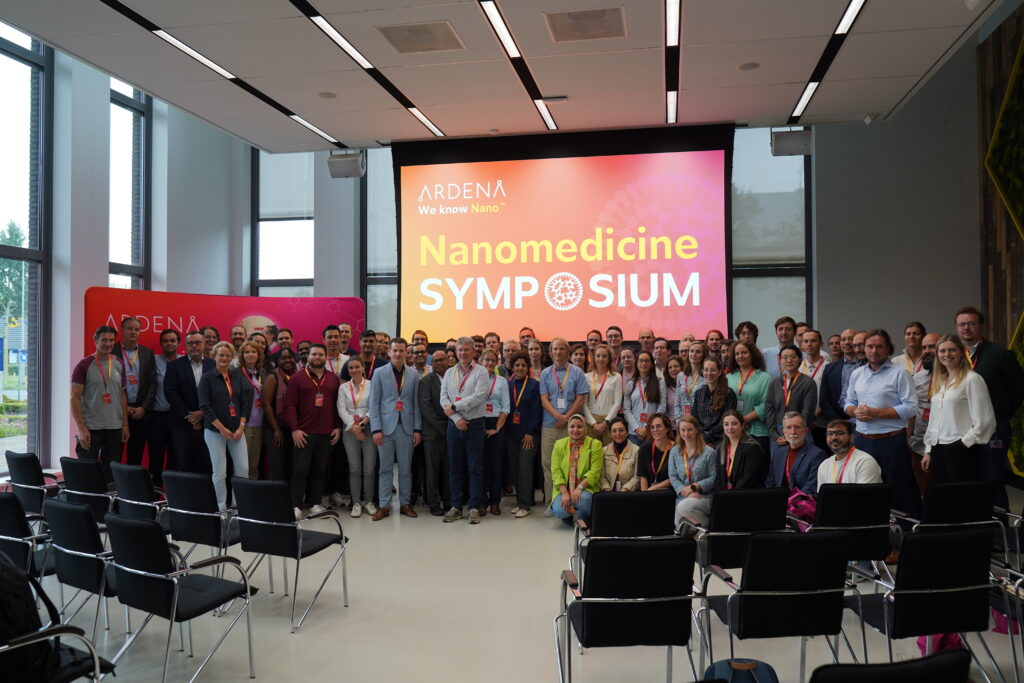
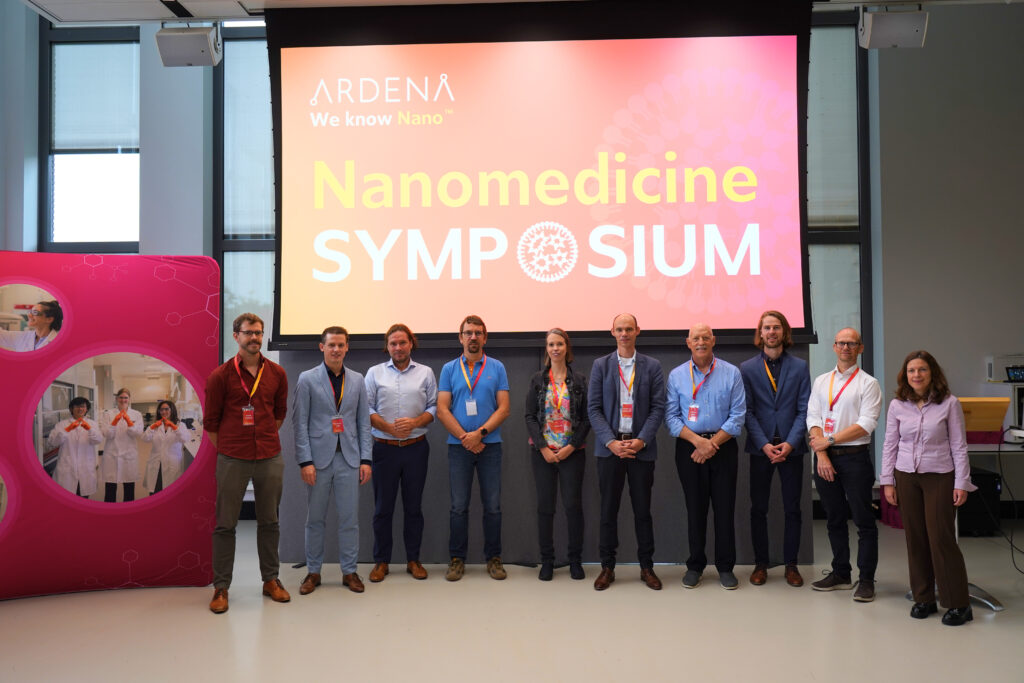
Historically, drug discovery has been focused on the search for novel small molecules; however, modern day therapeutic innovation is increasingly being driven by delivery systems, conjugation platforms, and complex formulation science. At the recent Nanomedicine and Bioconjugation Symposium, hosted by Ardena, clinical researchers, academics, bioprocess engineers, and bioanalytical experts convened to explore how advanced delivery technologies are enabling patient care (1).
Targeted Delivery and Liver Immunology
Opening the symposium, Dr. Christian Schröter, CEO and Managing Director of Topas Therapeutics, presented his company’s approach to treating autoimmune diseases by leveraging the liver’s natural mechanism for immune tolerance.
Autoimmune conditions occur when the immune system mistakenly attacks healthy tissues or non-dangerous antigens. For example, if someone suffers from celiac disease, their immune system can be triggered into damaging the lining of the small intestine if they consume gluten.
While treatments for autoimmune diseases vary depending on the condition, they are generally aimed at calming the immune system down and reducing inflammation. However, rather than broadly suppressing the immune system, Topas developed an alternative approach using a nanoparticle platform engineered to target liver sinusoidal endothelial cells, which line the small blood vessels of the liver and clear debris from the bloodstream.
“If we could switch off the reaction against gluten without impacting the rest of the immune system, we could actually help celiac patients,” Schröter explained. “And through the same premise we could help type 1 diabetes patients [and other autoimmune diseases].”
When liver sinusoidal endothelial cells (LSECs) process cellular fragments, they present peptide fragments to the immune system in a manner that stimulates regulatory T-cells or inactivates antigen-specific pro-inflammatory T-cells. To exploit this biological process, Topas designed 25 nm particles coated with a negatively charged polymer that mimics erythrocyte fragments. “So, if we would deliver peptides alone, we wouldn’t see the LSEC targeting,” Schröter noted. “We designed the particles to mimic these erythrocyte fragments and it works.”
Topas evaluated its lead candidate, TPM502, in a randomized, double-blind, placebo-controlled Phase IIa trial in celiac disease patients. Following two 30-minute intravenous infusions, patients received a gluten challenge. The trial achieved a statistically significant, dose-dependent reduction in inflammatory cytokines, with interleukin-2 levels dropping by three logs at the highest dose, accompanied by dose-dependent improvements in gastrointestinal symptoms and a clean safety profile.
“[The result] almost looks like real dose dependency across the different doses and it stays at that low level,” Schröter added. “It is a super strong sign for a next clinical trial.”
Given the fact that these LSECs perform the same antigen-presenting function regardless of the underlying disease, Schröter highlighted that Topas’ technology acts as a modular platform where surface peptides can be swapped to treat other conditions, such as multiple sclerosis or type 1 diabetes.
Micellar Platforms and Translational Rigor in Immuno-Oncology
Moving from autoimmune tolerance to solid tumor oncology, Dr. Morten Just Petersen, Chief Development Officer of MonTa Biosciences, detailed the translation of MBS8 (1V270), a lipid nanoparticle (LNP)-based therapeutic designed to overcome treatment resistance in advanced cancers, from bench to bedside.
MBS8 is a lipophilic small-molecule, second-generation systemic Toll-like receptor 7 (TLR7) agonist that has been designed to overcome the insolubility and off-target systemic inflammation commonly encountered with free agonists. To improve solubility and reduce potential toxicity, MonTa engineered a targeted micellar delivery system where the agonist co-assembles with DSPE-PEG 2000 into 13-to-14 nm micelles.
“Liposomes are so much more immunogenic compared to the micelles — sizes are around 13–14 nm in diameter, whereas liposomes are typically 100 to 120 nm — that makes a huge difference,” Petersen revealed. Additionally, the micellar structure protects the payload from aqueous hydrolysis, maintaining stability for years, he noted.
In order to translate the benchtop formulation to clinical-scale manufacture, MonTa needed to establish a scalable process. The company did this alongside its CDMO partner, Ardena, scaling from 1 L non-GMP batches to 20 L runs for GLP toxicology and clinical supply.
At this point, Petersen urged developers to perform non-GLP dose-range-finding studies in the exact animal strains and facilities intended for GLP testing. “I can highly recommend performing [this work]. We got a huge surprise when we did it, a particular strain of rats didn’t tolerate as high doses as we’ve seen previously,” he stated. “If we didn’t spend time on doing those dose-range-finding studies, we would have dead animals in our GLP studies!”
Dose escalation for MBS8 was completed across 76 patients and included a diverse range of solid tumors, confirming target engagement in circulating immune cells, Petersen specified. The study has been expanded into Phase Ib cohorts focusing on cutaneous and uveal melanoma displaying resistance to checkpoint inhibitors, he noted.
“The way I try to develop drugs is basically to kill them as early as possible, before too much time is spent, before too much money is spent, before we treat any patients,” remarked Petersen, reflecting on his approach to drug development. “So far, I haven’t succeeded in killing MBS8, but I’ll continue my work and see where that takes us.”
Tailoring Nanocarriers Beyond a Universal Carrier
Addressing the fundamental principles of carrier design, Dr. María José Alonso, PhD, Professor of Pharmaceutical Technology at the University of Santiago de Compostela and founder of Libera Bio, challenged the long-held paradigm of using off-the-shelf, ‘universal’ polymer platforms such as PLGA for varied drug payloads. “Over the years I became conscious that we really need to adapt the carrier to the cargo,” she revealed. “The more complex the molecule is, the more we need to adapt the technology to that specific kind of compound.”
Focusing on her team’s research, Alonso detailed their approach to accessing intracellular oncogenic targets, such as mutated KRAS proteins, through the creation of a high-density antibody delivery platform that is capable of packing 50 to 100 monoclonal antibodies inside a single 100 nm particle. During preclinical models assessing this approach, the system achieved endosomal escape and delivered functional anti-KRAS antibodies to reduce tumor growth, she highlighted.
“However, monoclonal antibodies are given at very high doses as compared to RNA,” Alonso noted, emphasizing that the engineering challenge for antibodies is packing density, whereas for RNA it is preserving structural integrity. Therefore, for RNA delivery, Alonso’s group developed non-LNP lipid-polymer complexes that eliminate PEG and cholesterol coatings, enhancing mechanical elasticity and tissue permeability.
When evaluating intracerebral administration for central nervous system disorders, Alonso observed that standard LNPs frequently remain trapped at the injection site. “Forget about crossing the blood–brain barrier and think about diffusing across the brain,” she asserted. “We found that the elasticity of our nanoparticles was much higher than that of LNPs.”
Using atomic force microscopy, Alonso’s team confirmed that higher mechanical elasticity directly correlates with widespread tissue diffusion across the brain matrix, while compositional tweaks allow the vector to selectively transfect either neurons or microglial cells.
Strategic Considerations in Clinical Translation and Funding
During a panel session for the first day of the symposium, Schröter, Petersen, and Alonso explored the financial, biological, and operational bottlenecks governing nanomedicine translation. Discussing clinical failure rates, the panelists identified a dual challenge: poor predictive validity of rodent models in oncology and immunology, and heightened investor risk aversion.
Schröter pointed out that nanomedicines often suffer from a ‘risk stack’ where novel mechanisms of action, novel delivery vectors, and untreated indications combine to deter venture capital. “Nanomedicines are considered to be innovative/new, and funding organizations translate that as risky,” he said. “You just pile up different categories of risk for investors, and I think the innovation in this case does not help for the funding situation.”
The panel debated two conflicting chemistry, manufacturing, and controls (CMC) strategies: prioritizing early clinical entry versus establishing upfront process scalability. Schröter shared that Topas entered the clinic with an early-stage process to generate human data before funding ran out, accepting that process redesign would be necessary for larger Phase II trials in the future. Conversely, Petersen noted that MonTa prioritized the establishment of a scalable, robust process early to remove manufacturing hurdles as a major selling point for prospective pharmaceutical acquisitions.
Addressing changing market expectations, the panelists were all in agreement that funding was no longer granted for reformulation technologies without clear clinical efficacy. Schröter emphasized that while investors evaluate clinical data first, manufacturing flaws act as a late-stage dealbreaker. “The moment they accept that your clinical data are good, they look at the rest. But when they come to CMC, you better make sure you don’t raise red flags because then they can easily kill the fundraising process,” he warned.
Target-Driven Nanomedicine Against Metastatic Cancer
Closing out day one, Dr. Zdravka Medarova, Co-founder and Chief Scientific Officer of TransCode Therapeutics, presented the clinical progression of TTX-MC138, a nanomedicine engineered to treat metastatic solid tumors in collaboration with Ardena. The candidate targets microRNA-10b, a master regulator of metastatic progression that is highly overexpressed in metastatic cells but virtually absent in healthy adult tissues.
“Identifying a good microRNA target is challenging, but once you find one that has very broad but cancer-specific effects on downstream targets, treating a patient with an inhibitor of that microRNA would be equivalent to injecting them with multiple targeted therapies,” Medarova explained. By inhibiting microRNA-10b, it is possible to downregulate tumor cell motility, modulate survival signaling pathways, and suppress PD-L1 expression to restore antitumor immune responses, she pointed out.
TransCode’s delivery platform uses a dextran-coated iron oxide nanoparticle with dual-targeting mechanics. A small core size and a 24-hour plasma half-life allow the particles to extravasate through leaky tumor vasculature, while the outer dextran shell engages micropinocytosis — an enhanced fluid-uptake pathway exploited by cancer cells.
Medarova revealed that human trial results demonstrated that over 98% of the oligonucleotide payload remained bound to the core for 24 hours after injection. Additionally, preclinical studies showed complete clearance of lung metastases in murine breast cancer models when combined with low-dose chemotherapy, while veterinary trials in companion cats with advanced metastatic breast cancer showed target inhibition lasting over three months from a single dose.
In a human Phase 0/Ia trial across 16 patients with advanced solid tumors, TTX-MC138 demonstrated no dose-limiting toxicities, achieved an 84% disease-stabilization rate, and yielded a 12-month progression-free survival rate exceeding 60%, Medarova confirmed. TransCode is currently enrolling Phase IIa trials in colorectal cancer patients to evaluate the elimination of circulating tumor DNA.
Synthetic Lipoproteins and Scavenger Receptor Targeting
Opening day two, Dr. Glenn Meyer, CMC, Product Development, Peptinovo Biopharma presented his company’s synthetic high-density lipoprotein (HDL) platform. Exploiting the dependency of cancer cells on cholesterol for tumor growth, Peptinovo designed its innovative Peptide-Amphiphile Lipid Micelle (PALM) nanotechnology to selectively target prodrug forms of chemotherapy drugs to the cholesterol-uptake pathways of the cancer cells.
The platform constructs an 8-to-12-nm particle around a short 20-amino-acid amphiphilic peptide that mimics the receptor-binding domain of native apolipoprotein A-I, Meyer explained. “I like to describe it as we take small molecules and we build a biologic,” he stated. “And that’s a bit of an unusual twist since we don’t actually ever use longer than a 20-mer peptide.”
To ensure stability in circulation, hydrophobic prodrug payloads are integrated into the phospholipid core, although extreme hydrophobicity is required to prevent premature leakage, Meyer stressed. “It’s a bit like asphalt,” he said. “You have to get down to about 10-18 water solubility or so, make it very, very phobic, then it will stay in your particle and just be happy.”
In preclinical evaluations of PALM with paclitaxel (PNB-281) by the NIH Nanotechnology Characterization Laboratory, the synthetic lipoproteins demonstrated a 14-day plasma half-life without premature drug release. “We were saying we don’t think it leaks at all, and they came back and said: ‘You guys’ win. It’s not coming out’,” Meyer recalled.
GLP toxicology studies performed in rats on PNB-281 have demonstrated elevated plasma drug levels without liver toxicity or peripheral neuropathy, Meyer confirmed. These results show that PNB-281 offers a significantly improved safety profile over paclitaxcel chemotherapy alone.
Overcoming the Translation Gap via Biomarkers and Patient Stratification
For the second talk of the day, Prof. Dr. Twan Lammers of RWTH Aachen University Clinic delivered an analysis of the translational gap in cancer nanomedicine, challenging historical critiques regarding low percentage-dose accumulation in tumors.
There has been some debate over tumor accumulation with past meta-analyses citing a median tumor delivery rate of approximately 0.7% of an injected dose, Lammers remarked. “This number is totally irrelevant because 0.0001% of a free drug makes it to the tumor, 1% is more than enough to give a good drug response,” he asserted.
Rejecting claims that enhanced permeability and retention (EPR) effects do not occur in humans, Lammers referenced SPECT-CT studies where up to 90% of evaluated patients demonstrated positive liposome or micelle tumor accumulation. According to him, the core clinical challenge is not an absence of EPR, but extreme inter- and intra-patient heterogeneity.
To eliminate non-responders prior to clinical enrollment, Lammers outlined two patient stratification strategies. The first involves diagnostic imaging, where repurposing approved iron oxide nanoparticles as MRI contrast agents allows non-invasive mapping of tumor accumulation before administering nanotherapeutics, such as liposomal irinotecan. Clinical data shows that patients with tumor uptake above the median exhibit significantly higher response rates, he revealed.
The second strategy uses machine learning analysis of pre-treatment tumor biopsies. Lammers’ team identified that functional blood vessel density and macrophage abundance strongly correlate with particle delivery and clinical response.
“We validated the key features. Five of them are related to the vasculature, and the sixth one is macrophages. If you think about it, it’s very logical because you need blood vessels kind of like the highway into the tumor and macrophages are the ones that take them up and keep them within the tumors,” Lammers explained.
Site-Specific Conjugation and Next-Gen ADCs
Independent expert Dr. Sander van Berkel provided a detailed overview of the structural evolution of antibody-drug conjugates (ADCs), which sit at the intersection of targeted small molecules and large biologic vectors. He noted that an ADC’s clinical success relies on balancing five interdependent parameters: target selection, site-specific conjugation, linker dynamics, polarity balance, and drug-to-antibody ratio (DAR).
“Depending on who you ask, they will give you different answers, but critically important in an ADC is actually the DAR,” van Berkel stated. He highlighted a shift away from traditional, heterogeneous lysine attachments toward precise chemo-enzymatic site-specific conjugation.
Illustrating this progress, van Berkel presented a case study on IBI343, a Claudin 18.2-targeting ADC developed by Innovent using Synaffix’s GlycoConnect technology. Native Fc glycans are trimmed and functionalized with azido-sugars, reacting via copper-free click chemistry with a polar-linked exatecan payload.
“You have two anchoring points that are unique to the whole antibody itself, and you end up with an ADC with four payloads attached,” van Berkel explained. “From a stability perspective, these molecules are super stable.”
Looking to future trends, van Berkel noted that over 60% of clinical-stage ADCs utilize topoisomerase I payloads, making acquired resistance a growing clinical challenge. To resolve this issue, the industry is rapidly shifting toward dual-payload ADCs carrying two distinct mechanisms of action on a single antibody construct. “With that, you actually overcome this resistance to the first payload itself. And that is the field that nowadays almost all companies are focusing on,” van Berkel added.
Scalable Manufacturing and QbD
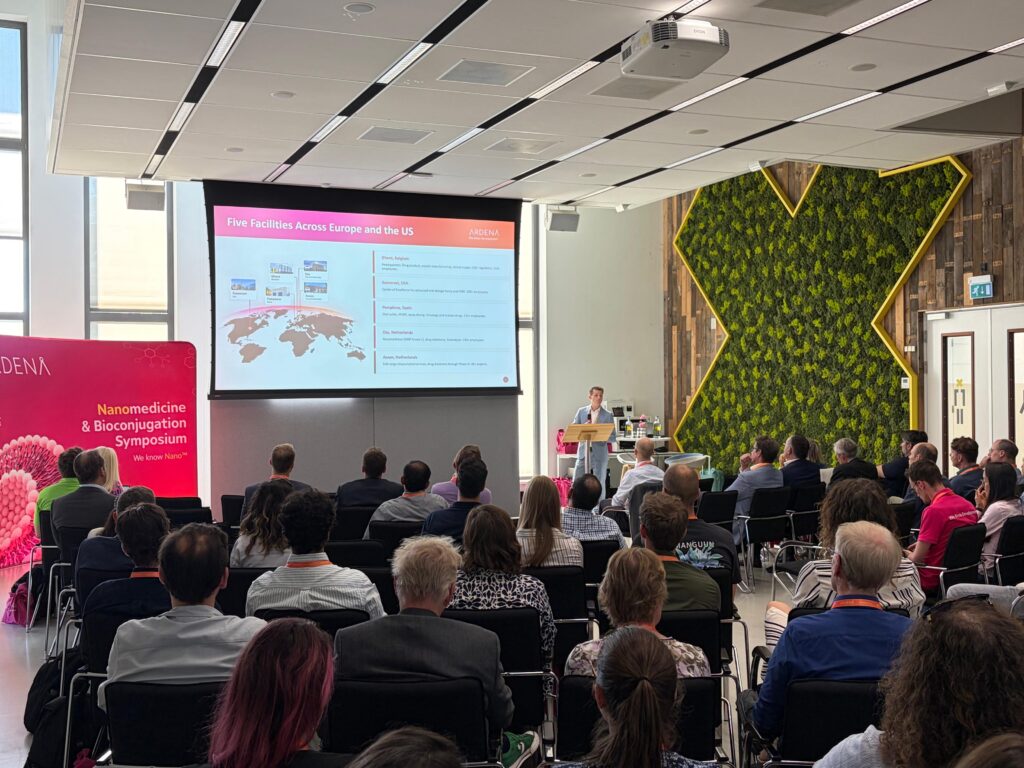
Dr. Bastiaan Buddingh’, Principal Scientist and Business Development Director for Nanomedicines at Ardena, outlined operational strategies for translating complex formulations to GMP clinical production. Adopting a quality-by-design (QbD) framework, Buddingh’ emphasized early identification of critical quality attributes (CQA), including particle size distribution, encapsulation efficiency, free-to-encapsulated drug ratios, and endotoxin levels.
“We take a staged approach,” Buddingh’ specified. “We start by looking critically at what has already been done by our clients because that is the gold standard, and typically this is done at very small scale, but this has not been designed in a scalable or industrial mindset yet.”
To bridge the gap to commercial manufacturing, Ardena replaces traditional batch mixing with continuous flow processing and tangential flow filtration (TFF). “The advantage of flow manufacturing is that, in theory, if you set it up correctly and you just let it run longer, you keep on generating the same particles continuously and you have less of a scale effect than if you go to a larger reactor,” Buddingh’ noted. Continuous microfluidics affords precise control over supersaturation and particle growth, while TFF efficiently removes unreacted reagents and organic solvents, he specified.
Buddingh’ also highlighted survey data showing that a majority of clinical failures with nanomedicines stem from inadequate analytical characterization, rather than API degradation. “Many quality issues for liposomes are related to characterization and specification,” he summarized. “Quality issues pertain to not fully understanding the characteristics of the product that you are making, which is understandable because it’s quite a complex product.”
Evolving Paradigms and the Path to 2030
During the final panel session of the symposium, Meyer, Lammers, van Berkel, and Buddingh’ reflected on industry trends, modularity, and future trajectories, with all of them agreeing that drug delivery technologies have shifted from a secondary support mechanism to a primary enabler of therapeutic innovation.
Discussing the success of ADCs, the panelists noted that early backing by major pharmaceutical firms provides the capital necessary to commoditize production components and de-risk the field for smaller biotechs. Maturity of the field has been aided by the commoditization of the individual components and an easily understandable ‘homing device’ concept, making investment and regulatory acceptance more straight-forward.
However, the panel cautioned against assuming that nanomedicine platforms are plug-and-play. While swapping a payload or targeting moiety in an LNP or ADC appears simple, altering components changes the biophysical profile, impacting clearance, stability, and tissue distribution. Furthermore, Meyer emphasized that commercial success requires non-negotiable manufacturing standards.
Looking forward to 2030, the panelists envisioned widespread clinical adoption of in vivo gene editing, integrated cross-silo predictive data models, commercial approvals for non-ADC targeted platforms, and CDMO workflows capable of accelerating complex molecules from discovery to clinic within 15 months.
Precision Bioanalytics and Characterization Frameworks
The remaining technical presentations of the symposium focused on the analytical tools required to validate complex drug delivery systems. Jeroen Vrancken, Field Application Scientist, Waters/Wyatt Technology presented separation-based characterization workflows for gene delivery vectors, such as LNPs and adeno-associated viruses.
While dynamic light scattering (DLS) offers high-throughput screening, the technique cannot resolve particle populations with size differences under three-fold, Vrancken pointed out. To overcome these limits, he suggested using matrix-free flattening-filter-free (FFF) coupled with multi-angle light scattering (MALS), UV, and differential refractive index detectors. “Because we do not have this porous material, but only a membrane in which it’s pressed down, it’s so much more gentle. We take less shearing degradation so that’s why you can use it actually for the whole nanometer scale,” Vrancken noted.
This approach allows researchers to resolve individual components in heterogeneous nanomedicines, such as exact payload encapsulation counts and particle shape factors, Vrancken explained. Highlighting the benefits of FFF–MALS, particularly early on in the formulation process as a way to avoid potential downstream failures, he stated: “A lot of information can be extracted from a single run to establish CQAs without multiple redundant experiments.”
Examining the evolving analytical strategies required to bring complex nanomedicines to the clinic, Dr. Maria Marioli, Principal Scientist at Ardena, addressed phase-appropriate sizing and regulatory standardization. She demonstrated that standard batch light scattering frequently fails to resolve bimodal particle mixtures or detect small subpopulations, whereas coupling FFF with multi-angle phase-resolved light scattering resolves hidden subpopulations and eliminates flow mode artifacts.
“Dynamic light scattering is a great tool because it’s very simple and a lot of times it works. But it should not be the only tool that you have for size,” Marioli emphasized. “You need to have a toolbox, and not only to have the toolbox, but to really understand the advantages and limitations of each tool you have.”
Marioli also highlighted Ardena’s contributions to the European Pharmacopoeia’s Nana Working Party, which is drafting standardized compendial chapters for liposomes and macromolecular complexes to guide future regulatory filings.
Closing the technical sessions, Rivca Valk, Senior Scientist at Ardena, examined bioanalytical mass spectrometry for polydisperse polymer nanoparticles. Valk explained that quantifying complex polymers in biological matrices presents severe challenges due to chain length variation, hydrophobicity, and matrix interferences.
“What is important to realize is that a polymer, because it is a mixture, is not a single small molecule,” Valk asserted. “For bioanalytical detection in matrix samples, two parts are absolutely critical: we have to have enough sensitivity, but also the selectivity to distinguish it from matrix components.”
While unit-resolution triple-quadrupole mass spectrometry suffered from background interferences and an inability to resolve overlapping charge states, high-resolution mass spectrometry provided sub-ppm mass accuracy and clean extraction chromatograms, Valk confirmed.
“On the triple-quad system, we have only a single decimal of accuracy, so we won’t be able to do much. But if we would have a high-resolution MS, then you get an exact mass determination, and from the exact mass, you would also be able to determine the elemental contribution,” Valk concluded.
To find out more about Ardena’s nanomedicine expertise, from LNP and polymeric nanoparticle formulation through to GMP manufacturing and analytical characterization, visit Ardena’s nanomedicine services.
Nanomedicine: LNP & Polymeric Nanoparticles | Ardena
Reference
1. Ardena. Nanomedicine & Bioconjugation Symposium 2026. Sept. 15–16, 2026.